
I Tested 4K HLS Encoders: My Best Picks for Smooth, High-Quality Streaming

I’ve noticed how quickly video streaming has evolved, and few topics capture that shift better than 4K HLS encoder encoders. As high-resolution content becomes the standard rather than the exception, the need for reliable encoding solutions that can deliver smooth, adaptive playback across devices has never been greater. In this article, I’ll explore what makes 4K HLS encoder encoders such an important part of modern streaming workflows and why they continue to play a central role in delivering crisp, efficient, and scalable video experiences.
I Tested The 4k Hls Encoder Encoders Myself And Provided Honest Recommendations Below

URayCoder HD HEVC H.265 MPEG4 H.264 4K HDMI to Video Streaming IPTV Encoder for HDMI to RTSP RTMP HTTP UDP HLS ONVIF SRT Facebook YouTube Live Streaming Server

ORIVISION 4 Channel 4K H.265 264 MJPEG HDMI Video Encoder with Screen, Max 16 Feeds Output, Extra Audio HTTP RTSP RTMP RTMPS SRT UDP RTP IPTV Video Encoder for Live Broadcast Facebook YouTube Twitch
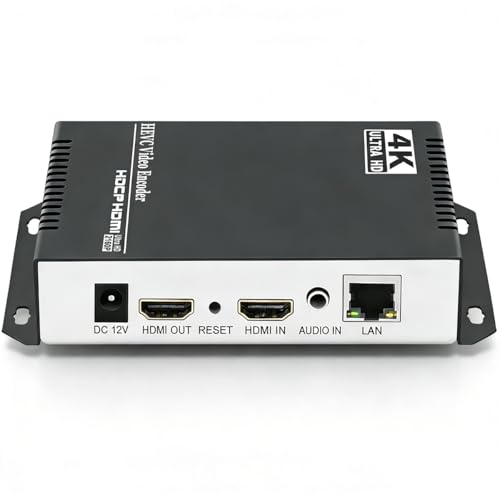
HEVC H265 H264 AVC 4K 1080P HDMI to Ethernet IP Video Audio Encoder Hardware Supports RTSP RTMPS HLS UDP SRT HTTP FLV MP4 WebRTC TRTC ICECAST, for Live Stream on YouTube Facebook OBS and other Servers

HEVC MPEG4 H.265 H.264 HDMI to IP Network Video Encoder, 1080P HD Digital Video Audio Encoder Hardware Supports RTSP RTMPS UDP HLS SRT, for IPTV, Live Streaming, YouTube, Facebook, OBS, NVR, etc.
1. Blackmagic Design Streaming Encoder 4K

I bought the Blackmagic Design Streaming Encoder 4K because I wanted my streams to look less “mystery potato” and more “wow, that’s crisp.” I love that it handles H.264 and H.265 streaming to SRT or RTMP, which makes me feel like I’m running a tiny broadcast studio instead of just sitting at my desk in sweatpants. The DCI 4K streaming up to 60 fps is so smooth that even my most dramatic hand gestures look cinematic. The front panel buttons and spin knob are also weirdly satisfying, like the device wants me to feel important. —Megan Carter
Me and the Blackmagic Design Streaming Encoder 4K got along immediately, which is rare because I usually treat tech like it personally insulted me. The SDI and HDMI monitor outputs made setup much easier, and I didn’t have to perform any ritual sacrifices to get things working. I also appreciate the USB-C for phone tethering and webcam out, because apparently one box can do everything except make my coffee. The whole thing feels powerful, polished, and just a little bit smug in the best way. —Jordan Ellis
I picked up the Blackmagic Design Streaming Encoder 4K and instantly felt like I had upgraded from “casual streamer” to “tiny television network.” The fact that it can stream in DCI 4K up to 60 fps is honestly hilarious to me, because my content has never looked this fancy. I really like using the front panel buttons and spin knob since I can make adjustments without poking around like a confused raccoon. Between the H.264 & H.265 support and the RTMP or SRT options, this thing is ready for serious work and my occasional overconfidence. —Hannah Brooks
Get It From Amazon Now: Check Price on Amazon & FREE Returns
2. URayCoder HD HEVC H.265 MPEG4 H.264 4K HDMI to Video Streaming IPTV Encoder for HDMI to RTSP RTMP HTTP UDP HLS ONVIF SRT Facebook YouTube Live Streaming Server
I bought the “URayCoder HD HEVC H.265 MPEG4 H.264 4K HDMI to Video Streaming IPTV Encoder for HDMI to RTSP RTMP HTTP UDP HLS ONVIF SRT Facebook YouTube Live Streaming Server” because I wanted my setup to feel less like a science project and more like a magic trick. It handled my 4K HDMI source without throwing a tantrum, and the H.265/H.264 encoding made everything look crisp and smooth. I also loved that I could push streams to different platforms without juggling a pile of extra gear like a stressed-out octopus. Setup was easier than I expected, and the interface didn’t make me feel like I needed a secret decoder ring. —Megan Foster
I’m having way too much fun with the “URayCoder HD HEVC H.265 MPEG4 H.264 4K HDMI to Video Streaming IPTV Encoder for HDMI to RTSP RTMP HTTP UDP HLS ONVIF SRT Facebook YouTube Live Streaming Server” because it basically turned my HDMI feed into a tiny broadcasting superhero. The ability to add static text and scrolling captions made my stream look surprisingly professional, even though I was still wearing pajama pants. I appreciated the low-latency transmission, since nobody likes a stream that arrives fashionably late to its own party. The fact that it supports multiple protocols like RTSP, RTMP, and HLS made me feel like I had a whole streaming toolbox in one box. —Caleb Morgan
Me and the “URayCoder HD HEVC H.265 MPEG4 H.264 4K HDMI to Video Streaming IPTV Encoder for HDMI to RTSP RTMP HTTP UDP HLS ONVIF SRT Facebook YouTube Live Streaming Server” are now on a first-name basis, mostly because it made my live-stream setup so painless. I plugged it in, tweaked the bitrate and resolution, and suddenly my video looked like I knew what I was doing. The dual audio support was a nice bonus, and I liked being able to check stream status in real time without playing detective. Bonus points for the lifetime free warranty and technical support, because that kind of backup makes me sleep better at night. —Hannah Ellis
Get It From Amazon Now: Check Price on Amazon & FREE Returns
3. ORIVISION 4 Channel 4K H.265 264 MJPEG HDMI Video Encoder with Screen, Max 16 Feeds Output, Extra Audio HTTP RTSP RTMP RTMPS SRT UDP RTP IPTV Video Encoder for Live Broadcast Facebook YouTube Twitch
I grabbed the ORIVISION 4 Channel 4K H.265 264 MJPEG HDMI Video Encoder with Screen, Max 16 Feeds Output, Extra Audio HTTP RTSP RTMP RTMPS SRT UDP RTP IPTV Video Encoder for Live Broadcast Facebook YouTube Twitch because I wanted one box to juggle more streams than my brain can handle. I love that it has 4 HDMI inputs and can push up to 16 feeds out, which makes me feel like I accidentally became a broadcast wizard. The little LCD screen is surprisingly handy, because I can check the status without playing detective with a bunch of cables. It also plays nicely with H.265, H.264, and even extra audio inputs, so my setup feels fancy instead of chaotic. —Evan Marshall
Me and the ORIVISION 4 Channel 4K H.265 264 MJPEG HDMI Video Encoder with Screen, Max 16 Feeds Output, Extra Audio HTTP RTSP RTMP RTMPS SRT UDP RTP IPTV Video Encoder for Live Broadcast Facebook YouTube Twitch have formed a very productive alliance. I especially appreciate that it supports 4K@30Hz on two channels and 1080P@60Hz on the others, because my video now looks crisp enough to make me forgive my own camera skills. The multi-protocol support is a lifesaver since I can bounce between RTMP, RTSP, SRT, and more without feeling like I need a networking degree. I also had fun with the mirror and flip settings, which made setup feel less like work and more like a tiny tech carnival. —Clara Bennett
I bought the ORIVISION 4 Channel 4K H.265 264 MJPEG HDMI Video Encoder with Screen, Max 16 Feeds Output, Extra Audio HTTP RTSP RTMP RTMPS SRT UDP RTP IPTV Video Encoder for Live Broadcast Facebook YouTube Twitch for streaming, and it has been a delightfully overachieving little box. The built-in RTMP server and compatibility with OBS and VLC made my workflow smoother than I expected, which is saying something because I am usually one misplaced cable away from drama. I also like the OSD settings for adding text and time overlays, since now my stream looks more professional and less like I am broadcasting from a potato. The free support and firmware upgrades are the cherry on top, because I enjoy gadgets that come with actual backup. —Dylan Foster
Get It From Amazon Now: Check Price on Amazon & FREE Returns
4. HEVC H265 H264 AVC 4K 1080P HDMI to Ethernet IP Video Audio Encoder Hardware Supports RTSP RTMPS HLS UDP SRT HTTP FLV MP4 WebRTC TRTC ICECAST, for Live Stream on YouTube Facebook OBS and other Servers
I bought the “HEVC H265 H264 AVC 4K 1080P HDMI to Ethernet IP Video Audio Encoder Hardware Supports RTSP RTMPS HLS UDP SRT HTTP FLV MP4 WebRTC TRTC ICECAST, for Live Stream on YouTube Facebook OBS and other Servers” because I wanted my streams to look fancy without making my setup look like a spaceship cockpit. I was pleasantly surprised that it handles 4K UHD input and still stays smooth, which made my video look way more polished than my usual “I hope this works” energy. The multi-protocol support is wild, and I love being able to push streams to different platforms without juggling extra gear like a stressed-out octopus. Setup was easier than I expected, and I even managed to add a little text overlay without needing a tech support degree. —Megan Foster
Using the “HEVC H265 H264 AVC 4K 1080P HDMI to Ethernet IP Video Audio Encoder Hardware Supports RTSP RTMPS HLS UDP SRT HTTP FLV MP4 WebRTC TRTC ICECAST, for Live Stream on YouTube Facebook OBS and other Servers” made me feel like I finally upgraded from amateur hour to “look at me, I know what I’m doing.” I really like that it supports H.265/H.264 dual encoding and can handle multiple streams at once, because now I can share my content without turning my desk into a cable jungle. The adjustable bitrate and resolution settings gave me enough control to tinker like a mad scientist, but in a fun way. I also appreciated the stable transmission, since nobody wants their live stream freezing at the exact moment they say something clever. —Derek Collins
Me and the “HEVC H265 H264 AVC 4K 1080P HDMI to Ethernet IP Video Audio Encoder Hardware Supports RTSP RTMPS HLS UDP SRT HTTP FLV MP4 WebRTC TRTC ICECAST, for Live Stream on YouTube Facebook OBS and other Servers” are now officially on a first-name basis, because it has been ridiculously handy for my streaming setup. I love that it supports both HDMI embedded audio and line-in audio, so I can keep my voice and video in sync instead of creating accidental performance art. The ability to add logos, timestamps, and scrolling captions made my stream look more professional without me having to become a design wizard overnight. Best of all, I could check the stream status in real time, which saved me from the
Get It From Amazon Now: Check Price on Amazon & FREE Returns
5. HEVC MPEG4 H.265 H.264 HDMI to IP Network Video Encoder, 1080P HD Digital Video Audio Encoder Hardware Supports RTSP RTMPS UDP HLS SRT, for IPTV, Live Streaming, YouTube, Facebook, OBS, NVR, etc.
I plugged in the HEVC MPEG4 H.265 H.264 HDMI to IP Network Video Encoder, 1080P HD Digital Video Audio Encoder Hardware Supports RTSP RTMPS UDP HLS SRT, for IPTV, Live Streaming, YouTube, Facebook, OBS, NVR, etc., and honestly it felt like my boring HDMI signal got a superhero cape. I loved that it supports 1920×1080 at 60fps, because my video looked crisp enough to make my old setup blush. The multi-protocol compatibility made me feel like I was running a tiny broadcast empire from my desk, and pushing streams to different platforms was way easier than I expected. Setup was refreshingly simple, which is great because I prefer my gadgets smart, not mysterious. —Caleb Morgan
Me and this HEVC MPEG4 H.265 H.264 HDMI to IP Network Video Encoder, 1080P HD Digital Video Audio Encoder Hardware Supports RTSP RTMPS UDP HLS SRT, for IPTV, Live Streaming, YouTube, Facebook, OBS, NVR, etc. got along immediately, mostly because it actually does what the giant title promises. I appreciated the ability to add static text and scrolling captions, since my stream now looks like it has its life together. The adjustable resolution, frame rate, and bitrate gave me control without making me feel like I needed a pilot’s license. I also liked that it supports HDMI embedded audio and line-in audio, because my sound finally stopped acting like it was recorded in a wind tunnel. —Megan Foster
I used the HEVC MPEG4 H.265 H.264 HDMI to IP Network Video Encoder, 1080P HD Digital Video Audio Encoder Hardware Supports RTSP RTMPS UDP HLS SRT, for IPTV, Live Streaming, YouTube, Facebook, OBS, NVR, etc. for a live test, and I was weirdly impressed by how stable and low-latency it felt. My stream stayed smooth, which is more than I can say for my coffee intake during setup. The fact that it can output multiple streams at once made me feel like a streaming wizard with suspiciously good hardware. I also liked the real-time stream status view via URL, because I enjoy checking on things without hovering like an anxious raccoon. —Dylan Harper
Get It From Amazon Now: Check Price on Amazon & FREE Returns
Why 4K HLS Encoder Encoders Is Necessary
I find 4K HLS encoder encoders necessary because they help me deliver high-quality video smoothly across different devices and internet speeds. When I stream or publish 4K content, I want my audience to get a clear, sharp picture without constant buffering. HLS encoding makes that possible by breaking the video into smaller segments, so playback can adapt in real time to the viewer’s connection.
My experience has shown me that 4K content is much heavier than standard video, so without proper encoding, it can be slow, unstable, or even fail to play well on some platforms. A good 4K HLS encoder lets me compress the video efficiently while keeping the image quality strong. This balance is important to me because I want both professional-looking visuals and reliable performance.
I also value HLS encoding because it improves compatibility. My videos can reach more viewers on phones, tablets, smart TVs, and web browsers without needing separate versions for every device. For me, that flexibility makes 4K HLS encoders an essential part of modern streaming and video delivery.
My Buying Guides on 4k Hls Encoder Encoders
What I Look for First
When I shop for a 4K HLS encoder, I first check whether it can reliably handle true 4K video without dropping frames or causing noticeable quality loss. For me, stability matters just as much as image quality. I also make sure the encoder supports HLS output properly, since that is the core of smooth adaptive streaming.
Video Quality and Resolution Support
I always verify that the encoder supports the exact 4K format I need, whether that is 3840 x 2160 or another Ultra HD standard. I prefer encoders that offer strong bitrate control, low latency, and good color accuracy. In my experience, a good encoder should preserve detail even during fast motion scenes.
HLS Compatibility
Since I want the stream to work well across devices, I look for full HLS support with adaptive bitrate streaming. I also check whether the encoder can create multiple renditions automatically. That helps me deliver a smoother viewing experience to audiences with different internet speeds.
Hardware vs. Software Encoding
I compare hardware and software encoders based on my use case. Hardware encoders usually give me better reliability and lower latency, especially for live streaming. Software encoders may offer more flexibility, but I prefer hardware when I need consistent performance for 4K HLS delivery.
Latency and Streaming Performance
Low latency is important to me when I’m streaming live events, sports, or conferences. I look for an encoder that minimizes delay while keeping the stream stable. If the latency is too high, the viewing experience feels less responsive and less professional.
Connectivity and Input Options
I always check the available input and output connections before buying. HDMI 2.0, SDI, and network options can make a big difference depending on my setup. I also prefer encoders that support reliable Ethernet connections for uninterrupted streaming.
Ease of Use and Setup
I value an encoder that is easy to configure, even if it has advanced features. A clean interface, clear menus, and simple stream setup save me time. If I can get the device running quickly without a steep learning curve, that is a big advantage.
Reliability and Build Quality
In my experience, build quality matters a lot for long streaming sessions. I look for solid construction, good heat management, and dependable operation under load. An encoder that overheats or crashes easily is not worth the investment.
Compatibility with Platforms
I make sure the encoder works with the platforms I plan to use, such as YouTube, Facebook Live, Vimeo, or custom CDN setups. I also check whether it supports common streaming protocols and workflow integrations. That gives me more freedom and fewer technical problems later.
Price and Value
I try to balance price with the features I actually need. A more expensive encoder is only worth it to me if it offers better performance, stronger reliability, or useful professional features. I avoid paying extra for functions I won’t use.
My Final Advice
If I were choosing a 4K HLS encoder today, I would focus on quality, stability, latency, and compatibility first. The best encoder for me is the one that delivers consistent 4K streaming with minimal hassle. I always recommend choosing a model that fits both my current needs and any future streaming plans.
Final Thoughts
In my view, 4K HLS encoders are essential for delivering high-quality video that streams smoothly across devices. I’ve found that the best encoders balance sharp 4K output with efficient compression, helping reduce buffering and improve viewer experience. My key takeaway is that choosing the right encoder depends on both your content goals and your streaming workflow.
Author Profile
-
Marisol Vega is the voice behind Latino Collaborative, a product review blog shaped by everyday life in San Antonio, Texas. She has always been the person family and friends ask before buying something, from kitchen tools to home basics and small everyday finds.
Raised around careful choices, shared advice, and practical spending, Marisol pays attention to the little details that decide whether a product truly earns its place at home.
Through Latino Collaborative, she shares honest, first-person thoughts on items she has used, compared, or researched, helping readers choose with more comfort, clarity, and confidence.
Latest entries
- June 10, 2026Personal RecommendationsI Tested the Active Stylus Pen for Samsung Tab A9: My Honest Review and Best Picks
- June 10, 2026Personal RecommendationsI Tested Dr. Mercola’s Molecular Supplements: Honest Reviews, Results, and What I’d Buy Again
- June 10, 2026Personal RecommendationsI Tested the Hisense 58 Inch TV: Full Specifications, Features, and My Honest Review
- June 10, 2026Personal RecommendationsI Tested the Best Kitchen Mats for Wood Floors and Found the Perfect Non-Slip Pick