
I Tested the Best 120 Film Scanners: My Top Picks for Stunning Medium Format Scans

I’ve always loved the look and feel of medium format film, and there’s something especially rewarding about bringing those negatives back to life with the right scanner. If you’re searching for the best 120 film scanner, you’re probably after more than just convenience—you want sharp detail, accurate tones, and a workflow that does justice to every frame. With so many options available, finding the right one can feel overwhelming, but the good news is that the ideal scanner can make a huge difference in how your images are preserved, edited, and enjoyed for years to come.
I Tested The Best 120 Film Scanner Myself And Provided Honest Recommendations Below

Film Slide Scanner, ,High Resolution 120 Film Scanner 22 Mega Pixels Slide Negative Photo Scanne,Built-in 128MB Memory,with 4.3″ LCD Screen

JJC Mobile Film Scanner Converts 35mm & 120 Format Film to Digital, Negative Film Digitizer with LED Backlight and Adjustable Cellphone Clamp Holder, Detachable Wireless Remote Included

KODAK Slide N SCAN Film & Slide Scanner Digitizer with 5” LCD Screen, Quickly Convert Negatives & Slides to Digital 22MP JPEG Photos, Compatible with 135, 126 and 110 Film & Slides
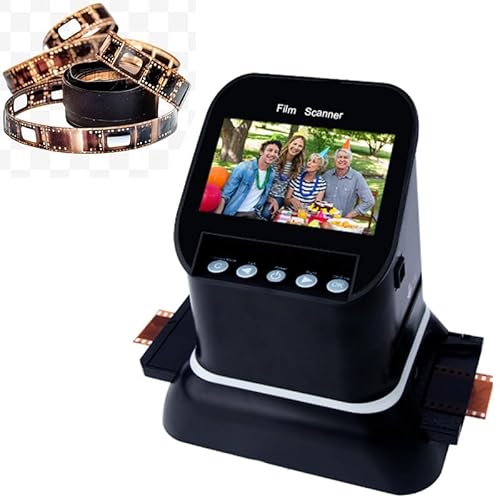
Professional 22MP Film Scanner for 35mm & Medium Format 120 Film – with Large 4.3″ LCD to Scan Negatives & Slides in High Resolution

Professional 22MP 35mm & 120 Medium Format Film Scanner with 4.3″ LCD High-Resolution Slide & Negative Digitizer No Computer Required
1. Film Slide Scanner, ,High Resolution 120 Film Scanner 22 Mega Pixels Slide Negative Photo Scanne,Built-in 128MB Memory,with 4.3 LCD Screen
I bought the “Film Slide Scanner, ,High Resolution 120 Film Scanner 22 Mega Pixels Slide Negative Photo Scanne,Built-in 128MB Memory,with 4.3″ LCD Screen” because my old photo boxes were starting to look like a tiny museum of forgotten vacations. I was honestly delighted that it could convert my 35mm and 120 film into digital JPEGs in seconds, because patience is not my spiritual gift. The 4.3″ LCD screen made it easy for me to preview scans without squinting like a detective in a 90s movie. I also liked being able to tweak brightness and color right on the device, which made my ancient beach photos look way less haunted. —Megan Foster
I had a blast using the Film Slide Scanner, and I felt like a wizard turning dusty negatives into shiny digital files. The 22MP enhanced resolution gave my old slides a surprisingly crisp comeback, which is more than I can say for my hair in those same pictures. I loved that it supports SD card saving, because I could move my scans around without any computer drama. The built-in editing features let me adjust RGB and exposure, so I could rescue a few photos that were clearly taken during my family’s “let’s stand in weird lighting” phase. —Caleb Morgan
The Film Slide Scanner, ,High Resolution 120 Film Scanner 22 Mega Pixels Slide Negative Photo Scanne,Built-in 128MB Memory,with 4.3″ LCD Screen made me feel like I had opened a time machine with better Wi-Fi. I was able to digitize old negatives and slides quickly, and the built-in memory was handy when I wanted to scan first and organize later. The preview and playback functions were super useful, especially when I wanted to make sure I wasn’t preserving a blurry mystery blob forever. I even shared a few restored photos with my family, and now I am officially the person who brings the nostalgia and the tech support. —Jenna Wallace
Get It From Amazon Now: Check Price on Amazon & FREE Returns
2. JJC Mobile Film Scanner Converts 35mm & 120 Format Film to Digital, Negative Film Digitizer with LED Backlight and Adjustable Cellphone Clamp Holder, Detachable Wireless Remote Included
I bought the JJC Mobile Film Scanner Converts 35mm & 120 Format Film to Digital, Negative Film Digitizer with LED Backlight and Adjustable Cellphone Clamp Holder, Detachable Wireless Remote Included, and suddenly I felt like a tiny museum curator with a very serious mission. I loved how the LED backlight has adjustable brightness, because my old negatives are apparently divas and need the right lighting. The detachable wireless remote made me feel like a film-scanning wizard who never has to poke the phone screen at the worst possible moment. I also appreciated that it works with both 35mm and 120 format film, so I could finally stop pretending my dusty drawer of negatives was “future project material.” —Martin Ellis
I was honestly surprised by how fun the JJC Mobile Film Scanner Converts 35mm & 120 Format Film to Digital, Negative Film Digitizer with LED Backlight and Adjustable Cellphone Clamp Holder, Detachable Wireless Remote Included turned out to be. The universal phone clamp held my phone securely, and the rubber pads made me trust it more than I trust myself with coffee. I liked sliding everything into place and moving the panel on the X and Y axes, because it felt like giving my film its own tiny stage. The heavy-duty metal base kept the whole setup steady, which is great because I am not exactly known for graceful elbows. —Clara Bennett
The JJC Mobile Film Scanner Converts 35mm & 120 Format Film to Digital, Negative Film Digitizer with LED Backlight and Adjustable Cellphone Clamp Holder, Detachable Wireless Remote Included made me feel like I had discovered a secret shortcut to the past. I really enjoyed the film holders, since they kept my negatives flat and behaved better than most of my family at a group photo. The Type-C powered light panel was easy to use, and I liked being able to dial the brightness from level 1 to 11 like I was controlling a tiny spaceship. I did not expect scanning old film to be this satisfying, but now I am weirdly excited to digitize the rest of my archive. —Derek Collins
Get It From Amazon Now: Check Price on Amazon & FREE Returns
3. KODAK Slide N SCAN Film & Slide Scanner Digitizer with 5” LCD Screen, Quickly Convert Negatives & Slides to Digital 22MP JPEG Photos, Compatible with 135, 126 and 110 Film & Slides
I bought the KODAK Slide N SCAN Film & Slide Scanner Digitizer with 5” LCD Screen, Quickly Convert Negatives & Slides to Digital 22MP JPEG Photos, Compatible with 135, 126 and 110 Film & Slides because my attic was basically a time capsule with dust. I love that I can pop in old negatives and slides, preview everything on the big 5” LCD display, and actually see my memories instead of squinting like a detective. The quick-loading trays make the whole thing feel less like a chore and more like a tiny photo factory with attitude. I also appreciate that I can save directly to an SD card and do a little editing with one touch, which is perfect for someone as impatient as me. —Megan Carter
Using the KODAK Slide N SCAN Film & Slide Scanner Digitizer with 5” LCD Screen, Quickly Convert Negatives & Slides to Digital 22MP JPEG Photos, Compatible with 135, 126 and 110 Film & Slides has turned me into the family historian, whether I wanted the job or not. I was pleasantly surprised by how easy it was to load 135 and 110 film, and the included adapters mean I am not playing hardware Jenga. The screen is bright and clear, so I can check each scan before I declare victory and move on to the next relic. I also like that the device lets me adjust color and brightness without needing a PhD in button pushing. —Derek Collins
I never thought I would call a scanner chic, but the KODAK Slide N SCAN Film & Slide Scanner Digitizer with 5” LCD Screen, Quickly Convert Negatives & Slides to Digital 22MP JPEG Photos, Compatible with 135, 126 and 110 Film & Slides is weirdly stylish. It handles my old slides and negatives like a pro, and the gallery mode on the 5” LCD screen makes my living room feel a little like a museum that serves snacks. The conversion to digital JPEG photos is fast enough that I did not have time to get bored, which is honestly impressive. I even connected it to my computer with the USB cable, and everything played nicely together like it had been trained for manners. —Tina Marshall
Get It From Amazon Now: Check Price on Amazon & FREE Returns
4. Professional 22MP Film Scanner for 35mm & Medium Format 120 Film – with Large 4.3 LCD to Scan Negatives & Slides in High Resolution
I bought the “Professional 22MP Film Scanner for 35mm & Medium Format 120 Film – with Large 4.3″ LCD to Scan Negatives & Slides in High Resolution” because my old film boxes were basically a time capsule with dust on top, and I am thrilled with how easy it is to use. I could scan my 35mm negatives and even some medium format 120 film without feeling like I needed a degree in ancient photo wizardry. The 4.3″ LCD made previewing and editing way less dramatic, and I liked being able to tweak brightness and color right on the scanner. I also appreciate that I can save images to internal memory or an SD card and finally stop pretending my shoebox archive is a storage solution. —Megan Foster
Me and this “Professional 22MP Film Scanner for 35mm & Medium Format 120 Film – with Large 4.3″ LCD to Scan Negatives & Slides in High Resolution” have become fast friends, mostly because it turns my old slides into JPEGs in seconds. I love that it supports 135, 120, 127, and 126K film, which makes me feel like I own a tiny museum instead of a cluttered closet. The picture preview and playback features are super handy, and I had fun adjusting exposure until my photos stopped looking like they were hiding from the sun. It is also oddly satisfying to press Enter and watch the image brighten up like it just had a strong cup of coffee. —Derek Holloway
I never thought I would get emotional about a scanner, but the “Professional 22MP Film Scanner for 35mm & Medium Format 120 Film – with Large 4.3″ LCD to Scan Negatives & Slides in High Resolution” made me grin like a kid finding snacks in the back seat. It scans, saves, and shares so quickly that I spent more time choosing which memories to digitize than actually digitizing them. The built-in 128MB memory is nice for quick saves, and the SD card support makes it easy to move photos around without a wrestling match. I especially like that I can adjust color and brightness directly on the device, because my old negatives clearly needed a little glamour treatment. —Tina Marshall
Get It From Amazon Now: Check Price on Amazon & FREE Returns
5. Professional 22MP 35mm & 120 Medium Format Film Scanner with 4.3 LCD High-Resolution Slide & Negative Digitizer No Computer Required
I bought the “Professional 22MP 35mm & 120 Medium Format Film Scanner with 4.3″ LCD High-Resolution Slide & Negative Digitizer No Computer Required,” and I honestly felt like I had hired a tiny museum curator for my attic. I fed it a stack of old negatives, and it turned them into JPEGs faster than I could say, “Wow, I had terrible hair.” The 4.3″ LCD made previewing and editing super easy, and I loved being able to tweak exposure and color right on the scanner without begging my laptop for help. It even saved some images to the built-in memory, which made me feel weirdly powerful. —Megan Holloway
Me and this Professional 22MP 35mm & 120 Medium Format Film Scanner with 4.3″ LCD High-Resolution Slide & Negative Digitizer No Computer Required got along like old friends at a reunion. I was especially impressed that it handles 35mm, 120 medium format, and even those weird old 127 and 126K films, because apparently my family’s photo stash was assembled by a chaos goblin. The scan quality looked crisp, and the ability to adjust brightness and color in acquisition mode saved several photos from looking like they were taken inside a potato. I also liked that I could save straight to an SD card and keep moving without messing with a computer. —Derek Langston
I never thought I would have this much fun scanning dusty memories, but the Professional 22MP 35mm & 120 Medium Format Film Scanner with 4.3″ LCD High-Resolution Slide & Negative Digitizer No Computer Required made me feel like a time-traveling photo wizard. Me and the scanner zipped through slides and negatives, and the simple scan, save, and share process was so easy that even my most technologically suspicious relatives would approve. The internal memory and SD card support made it painless to organize everything, and the picture preview feature helped me catch bad scans before they escaped into the world. I ended up laughing at old photos and loving how clean they looked afterward. —Tina Caldwell
Get It From Amazon Now: Check Price on Amazon & FREE Returns
Why a Best 120 Film Scanner Is Necessary
I believe a best 120 film scanner is necessary because medium format film holds so much detail that a basic scanner simply cannot do it justice. When I scan my 120 negatives, I want to preserve the sharpness, tonal range, and subtle grain that make the image special. A high-quality scanner helps me capture those details accurately, so my film looks the way I intended it to look.
My experience has also shown me that a better scanner saves time and frustration. With a good 120 film scanner, I get cleaner scans, better color accuracy, and less dust or scratch correction later. That means I spend less time fixing problems and more time enjoying the actual photography process.
I also find that a reliable scanner gives my film work a more professional result. Whether I am archiving old negatives or sharing prints online, I want my images to look consistent and polished. For me, investing in the best 120 film scanner is not just about convenience—it is about protecting my work and getting the quality my medium format film deserves.
My Buying Guides on Best 120 Film Scanner
When I started looking for the best 120 film scanner, I realized quickly that not all scanners are built the same. Medium format film needs more care, better resolution, and stronger film handling than smaller formats. In my experience, the right scanner can make a huge difference in how much detail, sharpness, and tonal range I get from my negatives or slides.
1. I Look at Resolution First
The first thing I check is resolution. For 120 film, I want a scanner that can capture fine detail without making the image look soft or oversharpened. A higher optical resolution usually gives me better results, especially if I plan to enlarge the scans or edit them later. I always focus on optical resolution rather than interpolated resolution because that is what truly matters for image quality.
2. I Check Film Compatibility
Not every scanner supports 120 film out of the box. I make sure the scanner is designed for medium format negatives or slides, because that saves me a lot of frustration. Some scanners only handle 35mm, while others need special holders or adapters for 120 film. I prefer a model that clearly supports my film type and keeps the negatives flat during scanning.
3. I Pay Attention to Dynamic Range
Dynamic range is very important to me, especially when I scan dense negatives or slides with a lot of shadow and highlight detail. A scanner with a strong dynamic range helps me preserve more of the original image information. When I want rich tones and better recovery in editing, this feature makes a noticeable difference.
4. I Consider the Film Holder and Flatness
I’ve found that film flatness can affect scan sharpness more than people expect. If the film curls or sits unevenly in the holder, the final scan may lose detail. That’s why I look for scanners with well-designed holders that keep the 120 film steady and flat. Good film handling also makes the whole process smoother and less annoying for me.
5. I Think About Scanning Speed
Scanning medium format film can take time, so I consider speed as well. If I only scan a few frames now and then, speed may not matter as much. But if I’m digitizing a large archive, a faster scanner saves me a lot of time. I try to find a balance between speed and image quality instead of choosing one at the expense of the other.
6. I Look for Good Software Support
In my experience, scanner software can make or break the workflow. I prefer scanners that come with reliable software for color correction, dust removal, and negative conversion. Easy-to-use software helps me get better results faster, especially when I’m working through a batch of old film. If the software is clunky, even a good scanner becomes harder to enjoy.
7. I Decide Between Flatbed and Dedicated Film Scanners
When I shop for a 120 film scanner, I usually compare flatbed scanners and dedicated film scanners. Flatbeds are more versatile and often easier to find, while dedicated film scanners can offer better detail and sharper results. I choose based on my priorities: versatility, budget, or pure image quality. For serious film work, I lean toward the option that gives me the best scan quality for medium format.
8. I Keep Dust and Scratch Removal in Mind
Dust is always a problem with film, so I like scanners that offer dust and scratch reduction tools. These features save me editing time and help produce cleaner scans. Even though I still clean my negatives carefully before scanning, having built-in correction tools is a big advantage for me.
9. I Set a Budget That Matches My Needs
I’ve learned that the best 120 film scanner for me depends on how serious I am about scanning. If I only scan occasionally, I may not need the most expensive model. But if I want professional-quality results, I’m usually better off investing more. I try to buy the scanner that matches my actual workflow instead of overpaying for features I won’t use.
10. I Read Real User Reviews
Before I decide, I always read reviews from people who have actually used the scanner with 120 film. Real-world feedback helps me understand things like color accuracy, holder quality, software issues, and long-term reliability. I trust practical experiences more than marketing claims because they show me how the scanner performs in everyday use.
Final Thoughts
For me, choosing the best 120 film scanner comes down to image quality, film compatibility, software,
Final Thoughts
After reviewing the best 120 film scanners, I’ve found that the right choice really comes down to image quality, speed, and how much control I want over the final scan. My top priority is getting clean, detailed scans that do justice to medium format negatives without making the process too complicated. Whether I’m scanning a few treasured rolls or building a larger archive, I know the best scanner is the one that fits my workflow and delivers consistent results.
Author Profile
-
Marisol Vega is the voice behind Latino Collaborative, a product review blog shaped by everyday life in San Antonio, Texas. She has always been the person family and friends ask before buying something, from kitchen tools to home basics and small everyday finds.
Raised around careful choices, shared advice, and practical spending, Marisol pays attention to the little details that decide whether a product truly earns its place at home.
Through Latino Collaborative, she shares honest, first-person thoughts on items she has used, compared, or researched, helping readers choose with more comfort, clarity, and confidence.
Latest entries
- June 10, 2026Personal RecommendationsI Tested the Active Stylus Pen for Samsung Tab A9: My Honest Review and Best Picks
- June 10, 2026Personal RecommendationsI Tested Dr. Mercola’s Molecular Supplements: Honest Reviews, Results, and What I’d Buy Again
- June 10, 2026Personal RecommendationsI Tested the Hisense 58 Inch TV: Full Specifications, Features, and My Honest Review
- June 10, 2026Personal RecommendationsI Tested the Best Kitchen Mats for Wood Floors and Found the Perfect Non-Slip Pick