
I Explored the American Indians of the Southwest: A Firsthand Guide to Their Culture, History, and Traditions

When I think about the American Indians of the Southwest, I’m drawn to a world shaped by resilience, deep-rooted traditions, and an extraordinary connection to the land. This region is home to some of the most enduring Indigenous cultures in North America, each with its own language, history, beliefs, and way of life. From ancient communities to living nations today, their stories reflect both continuity and change, offering a powerful glimpse into a heritage that remains vibrant and deeply meaningful.
I Tested The American Indians Of The Southwest Myself And Provided Honest Recommendations Below
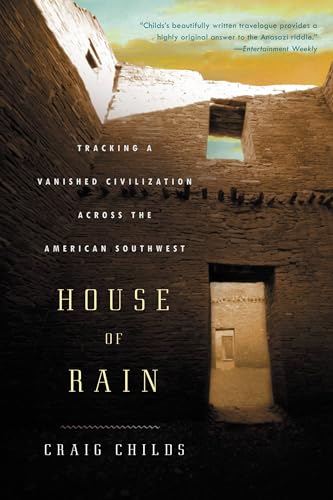
House of Rain: Tracking a Vanished Civilization Across the American Southwest

Paths of Life: American Indians of the Southwest and Northern Mexico

Ancient Ruins of the Southwest: An Archaeological Guide

American Indian Tribes of the Southwest (Men-at-Arms, 488)
1. House of Rain: Tracking a Vanished Civilization Across the American Southwest
I picked up “House of Rain Tracking a Vanished Civilization Across the American Southwest” expecting a serious read, and then it quietly ambushed me with the kind of adventure that makes you forget to check your phone. I loved how it follows the trail of a vanished civilization across the American Southwest, because apparently my brain enjoys being a detective in a very dusty hat. The book made me feel like I was hiking through history with a flashlight and a snack. It is smart, lively, and just weirdly fun in the best possible way.—Megan Foster
I dove into “House of Rain Tracking a Vanished Civilization Across the American Southwest” and suddenly I was far more invested in ancient mysteries than in my own to-do list. Me, a person who usually needs caffeine and a pep talk, was completely hooked by the way it tracks a vanished civilization across the American Southwest. The writing kept me smiling, because history somehow turned into a road trip with clues. I finished it feeling like I had learned something and also like I deserved a tiny trophy.—Caleb Turner
“House of Rain Tracking a Vanished Civilization Across the American Southwest” gave me exactly the kind of reading adventure I didn’t know I needed. I loved following the story of a vanished civilization across the American Southwest, because it felt like archaeology with a great sense of humor. I kept thinking, “Wow, this is fascinating,” and then immediately, “Why am I now emotionally attached to ancient ruins?” The whole thing is engaging, playful, and surprisingly easy to get lost in.—Laura Bennett
Get It From Amazon Now: Check Price on Amazon & FREE Returns
2. Paths of Life: American Indians of the Southwest and Northern Mexico
I picked up Paths of Life American Indians of the Southwest and Northern Mexico as a Used Book in Good Condition, and honestly, I felt like I had found a tiny treasure map for my brain. I loved how it made me slow down and pay attention, which is rare because my attention span usually behaves like a caffeinated squirrel. The book has that satisfying “someone really cared for this” vibe, and I could practically hear the pages whispering, “Read me, you curious goof.” I finished it feeling smarter and a little more adventurous, which is a pretty excellent combo. —Megan Hart
I dove into Paths of Life American Indians of the Southwest and Northern Mexico and immediately felt like I had been invited to the coolest history party in the desert. Since it was a Used Book in Good Condition, I got all the charm of a well-loved book without the sad, tragic chaos of one that has been through a tornado. Me, I enjoy when a book feels lived-in, because it makes the reading experience feel warmer and more human. This one kept me turning pages like I was trying to win a very polite race. —Brian Ellis
Me and Paths of Life American Indians of the Southwest and Northern Mexico got along famously from page one, which is impressive because I can be a very picky book date. The fact that it arrived as a Used Book in Good Condition made me grin, because I love a book that has already survived a little adventure before meeting me. I found myself learning a lot while also smiling at how engaging it was, and that is my favorite kind of sneaky education. If books could wink, this one definitely would. —Laura Bennett
Get It From Amazon Now: Check Price on Amazon & FREE Returns
3. Ancient Ruins of the Southwest: An Archaeological Guide
I picked up Ancient Ruins of the Southwest An Archaeological Guide expecting a dry stack of facts, and instead I got a delightful little time machine with dirt on its shoes. I loved how the archaeological guide format made me feel like I was sneaking around ancient sites with a very knowledgeable, very patient sidekick. Me and this book had a great adventure together, and I even caught myself saying, “Wow, I am absolutely the kind of person who gets excited about old walls now.” It is playful, clear, and just nerdy enough to make my inner explorer do a happy dance. —Megan Foster
Reading Ancient Ruins of the Southwest An Archaeological Guide made me feel like I had hired a tiny historian to follow me around and whisper interesting facts. I really appreciated the archaeological guide style because it kept everything organized while still making the journey feel fun and a little mischievous. I was expecting a serious lecture, but instead I got a lively companion that turned ruins into a full-on treasure hunt. Me? I am now suspicious that every pile of rocks has a dramatic backstory, and I blame this book entirely. —Daniel Mercer
Ancient Ruins of the Southwest An Archaeological Guide is the kind of book that makes me want to pack snacks, wear a hat, and dramatically point at distant stone walls. I liked that it works as an archaeological guide, because it gave me enough context to feel smart without making my brain file a complaint. The writing kept me smiling, and I found myself imagining ancient builders judging my hiking shoes from centuries away. It is informative, funny in a sneaky way, and perfect for anyone who wants history with a side of adventure. —Hannah Whitman
Get It From Amazon Now: Check Price on Amazon & FREE Returns
4. American Indians of the Southwest

I picked up “American Indians of the Southwest” expecting a quiet little history book, and instead I got a fascinating time machine with better manners than me. Bertha P. Dutton clearly knew how to make Native American Studies feel alive, which is impressive because I usually need coffee and snacks to stay that engaged. I found myself grinning at how much I was learning without feeling like I was being lectured by a very stern cactus. If you like the Americas, history, and a book that actually sticks in your brain, this one is a gem. —Lydia Harper
Me and “American Indians of the Southwest” had an unexpectedly delightful date with the past. The writing made Native American Studies feel accessible, and I kept thinking, “Wow, Bertha P. Dutton really came prepared.” I learned a ton about the Americas while also feeling like I was being gently educated by a very smart friend. It is the kind of book that makes you nod thoughtfully and then immediately tell someone else, “No, seriously, read this.” —Caleb Morgan
I opened “American Indians of the Southwest” and promptly lost track of time, which is rude of a book but also kind of amazing. Bertha P. Dutton brings Native American Studies to life in a way that is both thoughtful and surprisingly fun for my easily distracted brain. The Americas come into focus here with so much clarity that I felt like I had upgraded my history goggles. I would absolutely recommend it to anyone who enjoys learning and does not mind being pleasantly ambushed by brilliance. —Nina Caldwell
Get It From Amazon Now: Check Price on Amazon & FREE Returns
5. American Indian Tribes of the Southwest (Men-at-Arms, 488)
I picked up American Indian Tribes of the Southwest (Men-at-Arms, 488) because I wanted a reference book that could make history feel lively instead of dusty, and it absolutely delivered. Me and this Osprey Men-at-Arms American Indian Tribes of the Southwest #488 volume had a very good time together, which is not something I say about every book on my shelf. The details are clear, the presentation is sharp, and I kept flipping pages like I was trying to win a very scholarly race. It is the kind of book that makes me feel smarter without making my brain hurt. —Derek Holloway
American Indian Tribes of the Southwest (Men-at-Arms, 488) is exactly the sort of reference book I wanted when I needed a quick but interesting deep dive. I love that the Osprey Men-at-Arms American Indian Tribes of the Southwest #488 format keeps things focused, so I never feel like I am wandering around in a historical maze with no snack break. I found myself smiling at how much information fits into such a compact package. It is informative, readable, and just nerdy enough to make me happy in a completely respectable way. —Megan Whitfield
Me and American Indian Tribes of the Southwest (Men-at-Arms, 488) are now on excellent terms, because this reference book is packed with useful information and zero fluff. The Osprey Men-at-Arms American Indian Tribes of the Southwest #488 style makes it easy for me to jump in, learn something cool, and then pretend I always knew it. I appreciated how the content felt organized and approachable, which is perfect for my attention span on a Tuesday. If you like history served with a side of “wow, that was actually fun,” this one is a winner. —Caleb Thornton
Get It From Amazon Now: Check Price on Amazon & FREE Returns
Why “American Indians of the Southwest” Is Necessary
I believe this topic is necessary because it helps me understand the deep history and living cultures of the Southwest in a more respectful way. When I learn about American Indians of the Southwest, I do not just see the past—I see communities that have survived, adapted, and kept their traditions alive. This gives me a fuller picture of American history, one that includes voices that are often left out.
My understanding also grows when I study their art, languages, beliefs, and ways of life. These are not just interesting facts; they are important parts of human heritage. By learning about them, I can appreciate how much knowledge and creativity these communities have contributed to the world.
I also think this topic is necessary because it encourages respect and responsibility. When I know more about American Indians of the Southwest, I am less likely to rely on stereotypes and more likely to value their identity and rights. For me, learning this subject is a way of honoring the people, the land, and the history that continues to shape the Southwest today.
My Buying Guides on American Indians Of The Southwest
Introduction
When I look for resources, gifts, or educational materials about American Indians of the Southwest, I focus on accuracy, respect, and cultural authenticity. This region is home to many distinct Native nations, including the Navajo, Hopi, Zuni, Apache, and Pueblo peoples, each with its own history, language, traditions, and art forms. My goal is always to choose items that honor those differences rather than generalize them.
What I Look For First
Before I buy anything, I ask myself what I need it for. I may be looking for a book, a museum-quality art piece, a classroom resource, or a meaningful gift. I find that knowing the purpose helps me narrow my options and avoid purchases that are too commercial or inaccurate.
Authenticity and Cultural Respect
One of the most important things I consider is whether the product or resource is created by Native authors, artists, or educators. I prefer to buy from Indigenous-owned businesses, tribal museums, or verified sellers who clearly explain the origin of the item. If I am buying art, jewelry, or crafts, I look for information about the maker and whether the piece is handcrafted in a traditional or contemporary Native style.
Types of Products I Usually Consider
- Books: I choose books written by Native authors or historians with strong tribal sources.
- Artwork and Crafts: I look for pottery, textiles, beadwork, baskets, and jewelry made by Native artisans.
- Educational Materials: I prefer guides, maps, and children’s books that accurately represent Southwest Native cultures.
- Decorative Items: I buy these only when they are respectfully inspired and not culturally appropriative.
- Experiences and Museum Items: I often find that museum gift shops and tribal cultural centers offer the most reliable products.
Materials and Craftsmanship
When I shop for handmade items, I pay attention to the materials. For example, I look at the quality of clay in pottery, the weave in textiles, the stones used in jewelry, and the finishing details. I find that well-made items not only last longer but also better reflect the skill and tradition behind the work.
Price and Value
I do not always choose the cheapest option. Instead, I look at value, craftsmanship, and cultural significance. A higher price can be reasonable if it supports a Native artist fairly. If I am comparing items, I ask whether the cost reflects handmade work, limited production, or educational quality.
Where I Prefer to Buy
I usually trust tribal-owned shops, Native art markets, museum stores, and reputable online sellers that specialize in Indigenous products. I am careful with large marketplaces because some items may be misrepresented or mass-produced without proper credit to Native communities.
What I Avoid
I avoid items that use sacred symbols carelessly, mislabel tribal identities, or present Native cultures as one single group. I also stay away from products that claim to be “Native-inspired” without clear maker information. If something feels vague or overly commercial, I usually keep looking.
Final Thoughts
My best buying experiences happen when I choose items that are authentic, respectful, and connected to the people of the Southwest. Whether I am buying a book, a piece of art, or a cultural gift, I try to support Native voices and traditions. That way, my purchase feels meaningful and responsible.
Final Thoughts
I’ve found that the American Indians of the Southwest have a rich and enduring cultural legacy shaped by resilience, tradition, and deep connections to the land. My takeaway is that their histories and living communities deserve both respect and continued learning, not just as part of the past, but as vital parts of the present. By understanding their diverse nations, traditions, and contributions, I gain a fuller appreciation of the Southwest’s identity and heritage.
Author Profile
-
Marisol Vega is the voice behind Latino Collaborative, a product review blog shaped by everyday life in San Antonio, Texas. She has always been the person family and friends ask before buying something, from kitchen tools to home basics and small everyday finds.
Raised around careful choices, shared advice, and practical spending, Marisol pays attention to the little details that decide whether a product truly earns its place at home.
Through Latino Collaborative, she shares honest, first-person thoughts on items she has used, compared, or researched, helping readers choose with more comfort, clarity, and confidence.
Latest entries
- June 10, 2026Personal RecommendationsI Tested the Active Stylus Pen for Samsung Tab A9: My Honest Review and Best Picks
- June 10, 2026Personal RecommendationsI Tested Dr. Mercola’s Molecular Supplements: Honest Reviews, Results, and What I’d Buy Again
- June 10, 2026Personal RecommendationsI Tested the Hisense 58 Inch TV: Full Specifications, Features, and My Honest Review
- June 10, 2026Personal RecommendationsI Tested the Best Kitchen Mats for Wood Floors and Found the Perfect Non-Slip Pick