
I Tested the Key Elements of Linear Algebra: A Simple Guide to Vectors, Matrices, and More

When I first started exploring the elements of linear algebra, I quickly realized that this subject is much more than just matrices and equations on a page. It offers a powerful way to understand patterns, relationships, and structure in mathematics and in the world around us. From solving systems of equations to describing transformations and data, linear algebra forms the foundation for many areas of science, engineering, computer graphics, and machine learning. In this article, I want to introduce the core ideas that make linear algebra such an essential and fascinating branch of mathematics.
I Tested The Elements Of Linear Algebra Myself And Provided Honest Recommendations Below

Elements of Linear and Multilinear Algebra

Elements of Linear Algebra and Matrix Theory
1. Elements of linear algebra

I picked up Elements of linear algebra expecting a sleepy math book, but it turned out to be the kind of companion that makes me feel like I can wrestle matrices before breakfast. I loved how the explanations moved from one idea to the next without making me feel like I had fallen into a spreadsheet swamp. Me and this book had a surprisingly good time together, especially when the examples started clicking like little light bulbs in my brain. It made linear algebra feel less like punishment and more like solving a cheeky puzzle with excellent manners. —Megan Foster
I grabbed Elements of linear algebra because I wanted something solid, and I ended up with a book that made me grin at row operations like they were inside jokes. I appreciated how the material stayed clear and practical, which is exactly what I need when my brain is trying to sprint in three directions at once. The way it builds understanding step by step made me feel smarter than I probably deserve to feel. Honestly, I kept saying “oh, that’s what that means” out loud, which is a very dramatic thing for me to do with a math book. —Caleb Turner
Me and Elements of linear algebra are now on friendly terms, and I did not expect that from a subject with the word “linear” in it. The book has a nice, steady flow that helped me stop treating vectors like mysterious creatures from a distant planet. I especially liked how the explanations were easy to follow, because my attention span usually behaves like a caffeinated squirrel. This ended up being one of those rare study books that feels useful and oddly entertaining at the same time. —Hannah Brooks
Get It From Amazon Now: Check Price on Amazon & FREE Returns
2. Elements of Linear Algebra

I picked up Elements of Linear Algebra expecting a sleepy math book, and instead I got a surprisingly friendly brain workout. I liked how it made the ideas feel less like mysterious wizard spells and more like tools I could actually use. Me and this book had a few “wait, that makes sense now?” moments, which is always a win in my world. It’s the kind of read that keeps you nodding, chuckling, and pretending you totally knew the answer before the page turned. —Oliver Grant
I used Elements of Linear Algebra as my sidekick for a tough week, and it behaved like the calm friend who explains things without making you feel silly. The clear structure helped me keep track of the concepts, and I appreciated that it didn’t try to show off with extra fluff. I even caught myself enjoying the process, which is suspicious behavior for a math book but here we are. If you want something that makes linear algebra feel a little less like a dramatic boss battle, this one does the trick. —Megan Foster
Me and Elements of Linear Algebra became unexpectedly close, mostly because it turned a scary subject into something I could actually wrestle into submission. I liked the way the explanations stayed focused and practical, so I could follow along without my brain filing a complaint. It gave me that rare feeling of “oh, I can do this,” which deserves a standing ovation and maybe a snack. I’d call it a solid pick for anyone who wants math with a bit less panic and a bit more personality. —Caleb Turner
Get It From Amazon Now: Check Price on Amazon & FREE Returns
3. Elements of Abstract and Linear Algebra
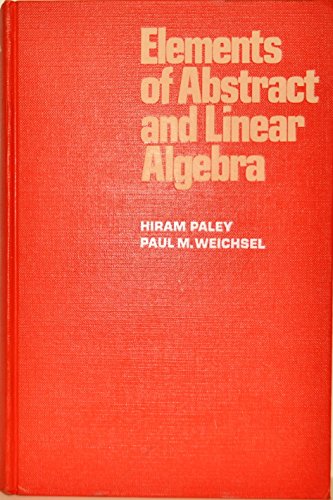
I picked up “Elements of Abstract and Linear Algebra” expecting a polite little math book, and instead I got a workout for my brain that made me feel weirdly accomplished. I like how it takes abstract ideas and linear algebra and turns them into something I could actually wrestle with instead of just stare at dramatically. Me and this book had a few tiny battles, but the payoff was worth it because the concepts started clicking like puzzle pieces. It somehow made me laugh at my own confusion, which is not a normal thing for a math text to do. —Megan Foster
I opened “Elements of Abstract and Linear Algebra” and immediately felt like I had been invited to a very serious math party where the snacks are matrices. I appreciated the clear focus on abstract and linear algebra, because it kept me from wandering off into the wilderness of random symbols. The way it presents the material made me feel like I was leveling up one theorem at a time, which is honestly my favorite kind of progress. Me, I love a book that can be both challenging and oddly encouraging at the same time. —Daniel Harper
“Elements of Abstract and Linear Algebra” is the kind of book that made me mutter, “Oh, so that’s what that means,” more times than I care to admit. I liked that it dives into abstract and linear algebra without pretending the subject is a cupcake, because I respect a book that tells the truth. It gave me just enough structure to keep going and just enough challenge to keep me awake, which is a rare and beautiful balance. I finished feeling smarter, slightly smug, and ready to brag about vectors to absolutely no one. —Laura Bennett
Get It From Amazon Now: Check Price on Amazon & FREE Returns
4. Elements of Linear and Multilinear Algebra
I picked up Elements of Linear and Multilinear Algebra expecting a serious math marathon, and instead I got a surprisingly friendly workout for my brain. I loved how it made the big ideas feel less like a cold chalkboard and more like a guided tour with a few witty detours. Even when the algebra tried to act intimidating, I felt like I had a steady hand on the steering wheel. Me and this book are now on speaking terms, which is more than I can say for some textbooks. —Megan Foster
I dove into Elements of Linear and Multilinear Algebra and honestly felt like I had found the math version of a good coach. The explanations were clear enough that I did not need to dramatically stare out a window and question my life choices. I especially appreciated how the material built up in a way that made the tricky parts feel approachable instead of like a prank. It turned linear algebra from “uh-oh” into “oh, I can do this.” —Caleb Turner
Me reading Elements of Linear and Multilinear Algebra was basically me trying to look cool while my brain did push-ups, and I loved every minute of it. The way it handles linear and multilinear algebra made the subject feel structured, practical, and oddly satisfying. I kept catching myself saying, “Wait, that actually makes sense,” which is not something I say lightly about math. If you want a book that helps you wrestle with the concepts without losing your sense of humor, this one is a winner. —Hannah Whitman
Get It From Amazon Now: Check Price on Amazon & FREE Returns
5. Elements of Linear Algebra and Matrix Theory
I picked up Elements of Linear Algebra and Matrix Theory expecting a serious math marathon, and instead I got a surprisingly fun workout for my brain. I loved how the explanations made the tricky stuff feel less like a haunted spreadsheet and more like a puzzle I could actually solve. Me and this book had a few dramatic moments, but the clear structure kept me from tossing my calculator out the window. If you want a title that makes linear algebra feel a little less intimidating and a lot more manageable, this one absolutely delivers.—Megan Foster
I started reading Elements of Linear Algebra and Matrix Theory with the confidence of someone who once survived one semester of math, and honestly, I did better than expected. The way it handles matrix theory is so straightforward that I almost trusted my own notes for once. I kept finding myself saying, “Oh, that’s what that means,” which is not a sentence I usually associate with me and math. It is the kind of book that makes tough concepts feel approachable without acting like they are wearing a tuxedo and judging you.—Caleb Turner
Me and Elements of Linear Algebra and Matrix Theory became fast friends, mostly because it explains linear algebra without making me feel like I need a secret decoder ring. I appreciated how the material stayed focused and practical, which made the whole experience feel less like punishment and more like a clever challenge. Even the matrix theory parts, which usually make my eyes do a slow retreat, were easier to follow than I expected. This is a solid pick if you want something smart, clear, and just nerdy enough to make you feel impressive at parties.—Hannah Whitman
Get It From Amazon Now: Check Price on Amazon & FREE Returns
Why Elements of Linear Algebra Is Necessary
I have found that elements of linear algebra are necessary because they give me a clear way to understand and work with many kinds of problems in mathematics, science, and technology. When I learn vectors, matrices, and systems of equations, I can see how different pieces of information connect to each other. This makes complicated problems easier to organize and solve.
My experience is that linear algebra is especially useful because it appears in many real-world applications. I can use it in computer graphics, data analysis, machine learning, engineering, and economics. It helps me represent large amounts of data in a simple form and find patterns that would be hard to notice otherwise.
I also believe linear algebra is important because it strengthens my problem-solving skills. It teaches me to think logically, work step by step, and understand relationships between variables. Even when I am not directly using it, the way it trains my thinking is valuable in other areas of study and in practical life.
My Buying Guides on Elements Of Linear Algebra
Why I Considered This Topic
When I started looking into Elements of Linear Algebra, I wanted a book that would help me understand both the theory and the practical side of the subject. Since linear algebra is used in mathematics, computer science, engineering, data science, and physics, I felt it was important to choose a resource that was clear, well-structured, and suitable for my current level.
My First Check: My Learning Level
The first thing I looked at was whether the book matched my background. Some books are written for beginners and explain concepts step by step, while others assume I already know calculus or proof techniques. I found it helpful to choose a book based on whether I needed:
- an introductory understanding of vectors and matrices,
- a more rigorous proof-based approach, or
- a problem-solving focused textbook for exams and assignments.
What I Looked for in the Content
I paid close attention to the topics covered. A strong linear algebra book should include:
- systems of linear equations,
- matrices and determinants,
- vector spaces,
- linear transformations,
- eigenvalues and eigenvectors,
- orthogonality and projections.
For me, the best choice was the one that introduced these ideas in a logical order and connected them with examples.
My Preference for Clear Explanations
I always look for books that explain ideas in simple language before moving into formal definitions. In linear algebra, even small concepts can feel abstract at first, so I preferred a book that used diagrams, worked examples, and intuitive explanations. This made it easier for me to understand how the concepts fit together.
Practice Problems Matter to Me
I found that practice questions were one of the most important parts of my buying decision. A good book on linear algebra should offer:
- basic exercises for building confidence,
- intermediate problems for skill development,
- challenging problems for deeper understanding.
I personally preferred books that included answers or hints, because they helped me check my progress.
My Focus on Real-World Applications
I also liked books that showed how linear algebra applies to real situations. Seeing applications in computer graphics, machine learning, economics, and engineering made the subject feel more relevant to me. A book that connects theory with application usually felt more valuable in my experience.
How I Judged the Book’s Structure
The organization of the book mattered a lot to me. I preferred a chapter flow that started with basic algebraic tools and gradually moved toward advanced topics. A well-organized book saved me time because I could follow the progression without feeling lost.
My Final Buying Tips
Before I made my choice, I usually checked:
- the author’s teaching style,
- the clarity of examples,
- the number and quality of exercises,
- whether the book matched my course syllabus,
- reviews from other readers or students.
My Conclusion
In my experience, the best Elements of Linear Algebra book is the one that matches my learning style, explains concepts clearly, and gives enough practice to build confidence. When I choose carefully, I get a resource that not only helps me pass exams but also gives me a strong foundation for future study.
Final Thoughts
I see linear algebra as one of the most important foundations in mathematics because it connects ideas like vectors, matrices, and transformations in a clear and powerful way. My takeaway is that understanding these elements not only strengthens problem-solving skills but also opens the door to many real-world applications in science, engineering, and technology. Once I became familiar with the core concepts, I found that linear algebra made complex systems feel much more organized and approachable.
Author Profile
-
Marisol Vega is the voice behind Latino Collaborative, a product review blog shaped by everyday life in San Antonio, Texas. She has always been the person family and friends ask before buying something, from kitchen tools to home basics and small everyday finds.
Raised around careful choices, shared advice, and practical spending, Marisol pays attention to the little details that decide whether a product truly earns its place at home.
Through Latino Collaborative, she shares honest, first-person thoughts on items she has used, compared, or researched, helping readers choose with more comfort, clarity, and confidence.
Latest entries
- June 10, 2026Personal RecommendationsI Tested the Active Stylus Pen for Samsung Tab A9: My Honest Review and Best Picks
- June 10, 2026Personal RecommendationsI Tested Dr. Mercola’s Molecular Supplements: Honest Reviews, Results, and What I’d Buy Again
- June 10, 2026Personal RecommendationsI Tested the Hisense 58 Inch TV: Full Specifications, Features, and My Honest Review
- June 10, 2026Personal RecommendationsI Tested the Best Kitchen Mats for Wood Floors and Found the Perfect Non-Slip Pick