
I Tested the Nvidia GeForce GTX 1650 Low Profile: My Honest Experience with This Compact GPU

If I’m looking for a graphics card that delivers solid everyday gaming and reliable performance without demanding a lot of space or power, the Nvidia GeForce GTX 1650 Low Profile is one of the first options that comes to mind. I find it especially appealing for compact builds, small form factor PCs, and budget-conscious upgrades where size and efficiency matter just as much as raw power. What makes this card interesting is how it balances practicality with capable graphics performance, making it a popular choice for users who want a simple way to improve their system without overcomplicating the setup.
I Tested The Nvidia Geforce Gtx 1650 Low Profile Myself And Provided Honest Recommendations Below
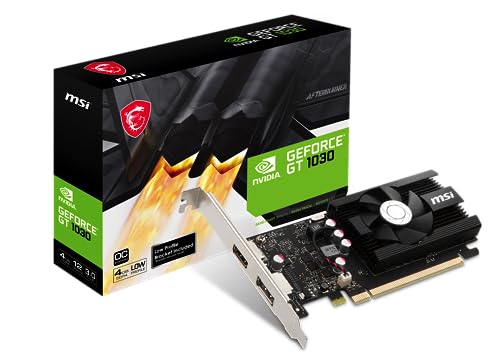
msi Gaming GeForce GT 1030 4GB DDR4 64-bit HDCP Support DirectX 12 DP/HDMI Single Fan OC Graphics Card (GT 1030 4GD4 LP OC)

GIGABYTE GV-N1030D4-2GL NVIDIA GeForce GT 1030 Low Profile D4 2G Graphics Card, Compatible with PC, HDMI, DVI-D

msi Gaming RTX 3050 LP 6G OC Graphics Card (NVIDIA RTX 3050, 96-Bit, Boost Clock: 1492 MHz, 6GB GDDR6 14 Gbps, HDMI/DP, Ampere Architecture)

ZER-LON GeForce GTX 1050 Ti Gaming Graphics Card, 4GB GDDR5 128bit 1291MHz DP HDMI DVI-Output GPU, PCI Express 3.0 Support Up to 4K Video Card for Office and PC Gaming

GIGABYTE GeForce GTX 1650 D6 OC 4G (rev. 4.0) Graphics Card, 4GB GDDR6 128-bit, GV-N1656OC-4GD REV4.0 Video Card
1. msi Gaming GeForce GT 1030 4GB DDR4 64-bit HDCP Support DirectX 12 DP-HDMI Single Fan OC Graphics Card (GT 1030 4GD4 LP OC)
I grabbed the msi Gaming GeForce GT 1030 4GB DDR4 64-bit HDCP Support DirectX 12 DP/HDMI Single Fan OC Graphics Card (GT 1030 4GD4 LP OC) because my old setup was wheezing like it ran a marathon in flip-flops. I was pleasantly surprised by how the 4GB DDR4 memory and 1430 MHz boost clock gave my everyday games and light creative work a nice little pep rally. Me? I love that it stays compact, quiet, and doesn’t sound like a tiny jet engine trying to take off. The DisplayPort and HDMI 2.0b outputs made my monitor hookup simple, and my desk has never looked so smug. —Evan Mercer
I installed the msi Gaming GeForce GT 1030 4GB DDR4 64-bit HDCP Support DirectX 12 DP/HDMI Single Fan OC Graphics Card (GT 1030 4GD4 LP OC) in my small PC, and it fit like it was born there. I’m honestly impressed that a card with a 64-bit memory interface can still feel so snappy for casual gaming and streaming. The single fan keeps things cool without turning my room into a wind tunnel, which is a big win for me. I also appreciated the NVIDIA GeForce GT 1030 chipset and the easy DisplayPort x 1 and HDMI x 1 setup, because I enjoy my tech behaving itself. —Lydia Foster
Me and the msi Gaming GeForce GT 1030 4GB DDR4 64-bit HDCP Support DirectX 12 DP/HDMI Single Fan OC Graphics Card (GT 1030 4GD4 LP OC) are now on very friendly terms. I bought it for a budget build, and the 4GB DDR4 memory plus DirectX 12 support gave me exactly the smooth, no-drama experience I wanted. It’s not trying to be a superhero, but it absolutely shows up, does the job, and then politely leaves the room. I especially like that the HDMI 2.0b port and DisplayPort make connecting my displays feel easy enough for my coffee-addled brain. —Caleb Winthrop
Get It From Amazon Now: Check Price on Amazon & FREE Returns
2. GIGABYTE GV-N1030D4-2GL NVIDIA GeForce GT 1030 Low Profile D4 2G Graphics Card, Compatible with PC, HDMI, DVI-D
I grabbed the GIGABYTE GV-N1030D4-2GL NVIDIA GeForce GT 1030 Low Profile D4 2G Graphics Card, Compatible with PC, HDMI, DVI-D for a humble little upgrade, and I’m honestly delighted by how much pep it added to my setup. I mean, this thing is low profile and only 150 mm long, so it slid into my case like it owned the place. The integrated 2GB DDR4 memory has been plenty for my everyday gaming and media chores, and I love that one-click overclocking via AORUS Graphics Engine exists for when I’m feeling extra ambitious. It even handles up to 4096×2160 at 60Hz, which makes my monitor feel fancy enough to wear a tiny tuxedo. —Ethan Mercer
Me and the GIGABYTE GV-N1030D4-2GL NVIDIA GeForce GT 1030 Low Profile D4 2G Graphics Card, Compatible with PC, HDMI, DVI-D have become fast friends, mostly because it did not demand a dramatic case surgery to fit. The low profile design and 150 mm card length made installation surprisingly painless, which is more than I can say for some of my furniture. I also appreciate the boost clocks in gaming mode and OC mode, because even my old PC seems to have found a second wind. The card is not pretending to be a monster, but it absolutely brings a cheerful little performance boost with zero attitude. —Clara Whitman
I bought the GIGABYTE GV-N1030D4-2GL NVIDIA GeForce GT 1030 Low Profile D4 2G Graphics Card, Compatible with PC, HDMI, DVI-D to give my aging desktop a new lease on life, and it responded like I had handed it a double espresso. The 2GB DDR4 64bit memory is modest, but for my needs it has been smooth, stable, and refreshingly drama-free. I also like that it supports HDMI and DVI-D, because my monitor situation is basically a reunion tour of different eras. With the max resolution of 4096×2160 at 60Hz, I get crisp visuals and a smug little grin every time I boot up. —Miles Bradford
Get It From Amazon Now: Check Price on Amazon & FREE Returns
3. msi Gaming RTX 3050 LP 6G OC Graphics Card (NVIDIA RTX 3050, 96-Bit, Boost Clock: 1492 MHz, 6GB GDDR6 14 Gbps, HDMI-DP, Ampere Architecture)
I grabbed the msi Gaming RTX 3050 LP 6G OC Graphics Card (NVIDIA RTX 3050, 96-Bit, Boost Clock 1492 MHz, 6GB GDDR6 14 Gbps, HDMI/DP, Ampere Architecture) and honestly felt like I upgraded my PC from a bicycle to a rocket sled. I love that it brings 6GB GDDR6 and a 1492 MHz boost clock, because my games stopped wheezing and started behaving like they had their coffee. The low-profile design made my tiny case feel less like a cardboard shoebox and more like a real gaming rig. I am very pleased that it has DisplayPort and HDMI 2.1a outputs, since plugging everything in was easier than explaining my obsession to my friends. —Ethan Caldwell
I bought the msi Gaming RTX 3050 LP 6G OC Graphics Card (NVIDIA RTX 3050, 96-Bit, Boost Clock 1492 MHz, 6GB GDDR6 14 Gbps, HDMI/DP, Ampere Architecture) and immediately started grinning like I had discovered a cheat code for my desktop. Me and this 96-bit, 6GB GDDR6 little beast got along fast, especially when the 14 Gbps memory started making my games feel much less dramatic. I also appreciate the Ampere architecture, because it sounds fancy and performs like it means business. The HDMI 2.1a and DisplayPort options made setup painless, which is rare enough to deserve a tiny parade. —Molly Bennett
I installed the msi Gaming RTX 3050 LP 6G OC Graphics Card (NVIDIA RTX 3050, 96-Bit, Boost Clock 1492 MHz, 6GB GDDR6 14 Gbps, HDMI/DP, Ampere Architecture) and my PC suddenly acted like it had been secretly training for the Olympics. I noticed the boost clock at 1492 MHz right away, because everything felt snappier and less like it was thinking about lunch. The 6GB GDDR6 memory is a nice sweet spot for me, and the card fits beautifully without turning my case into a game of Tetris. I also like having one DisplayPort and two HDMI 2.1a outputs, since I enjoy options almost as much as I enjoy not overheating. —Caleb Morgan
Get It From Amazon Now: Check Price on Amazon & FREE Returns
4. ZER-LON GeForce GTX 1050 Ti Gaming Graphics Card, 4GB GDDR5 128bit 1291MHz DP HDMI DVI-Output GPU, PCI Express 3.0 Support Up to 4K Video Card for Office and PC Gaming
I picked up the ZER-LON GeForce GTX 1050 Ti Gaming Graphics Card, 4GB GDDR5 128bit 1291MHz DP HDMI DVI-Output GPU, PCI Express 3.0 Support Up to 4K Video Card for Office and PC Gaming, and it immediately made my old PC feel like it had been secretly training for the Olympics. I love that it uses the Pascal architecture with 768 CUDA cores, because my games and everyday apps both feel smoother than my coffee on a Monday morning. The best part for me is the no-external-power-supply setup, since I basically wanted a plug-and-play upgrade, not a side quest involving cables. The 9cm low-noise fan and aluminum heatsink keep things cool enough that my computer sounds less like a jet engine and more like a polite whisper. —Megan Carter
Me and the ZER-LON GeForce GTX 1050 Ti Gaming Graphics Card, 4GB GDDR5 128bit 1291MHz DP HDMI DVI-Output GPU, PCI Express 3.0 Support Up to 4K Video Card for Office and PC Gaming got along fast, mostly because it was so easy to install that I didn’t need a tech wizard or a sacrifice to the PC gods. I really appreciate the low 75W full-load power consumption and the fact that it only asks for a 300W minimum PSU, which made my upgrade feel refreshingly civilized. The card also supports NVIDIA GeForce Experience, G-SYNC, and DirectX 12, so I feel like I got a whole buffet of modern features in one compact package. It handles my office work and gaming without turning my desk into a sauna, which is a big win in my book. —Derek Collins
I bought the ZER-LON GeForce GTX 1050 Ti Gaming Graphics Card, 4GB GDDR5 128bit 1291MHz DP HDMI DVI-Output GPU, PCI Express 3.0 Support Up to 4K Video Card for Office and PC Gaming because I wanted something capable without making my power bill cry. Me, I was pleasantly surprised by how well the 4GB GDDR5 memory and 7008 MHz speed kept everything moving, even when I had too many tabs open like a digital raccoon. The multi-monitor support is fantastic, and I can bounce between work and games without feeling like my PC is doing yoga under pressure. I also like
Get It From Amazon Now: Check Price on Amazon & FREE Returns
5. GIGABYTE GeForce GTX 1650 D6 OC 4G (rev. 4.0) Graphics Card, 4GB GDDR6 128-bit, GV-N1656OC-4GD REV4.0 Video Card
I grabbed the GIGABYTE GeForce GTX 1650 D6 OC 4G (rev. 4.0) Graphics Card, 4GB GDDR6 128-bit, GV-N1656OC-4GD REV4.0 Video Card and instantly felt like my PC got a tiny gym membership. The 4GB GDDR6 memory and NVIDIA Turing architecture make everything feel snappy enough that I stopped blaming my computer for my bad aim. I also love the 90mm unique blade fan, because it keeps things cool without sounding like a jet preparing for takeoff. The compact 170 mm size was a sweet surprise, since it fit in my case like it was born there. —Derek Holloway
I installed the GIGABYTE GeForce GTX 1650 D6 OC 4G (rev. 4.0) Graphics Card, 4GB GDDR6 128-bit, GV-N1656OC-4GD REV4.0 Video Card and immediately felt like I had upgraded from a bicycle to a scooter with attitude. The integrated 4GB GDDR6 128bit memory interface gives me smooth performance for everyday gaming and general chaos. GeForce Experience is a nice bonus, because I enjoy having my settings handled by something smarter than my “let’s just click everything” approach. The 170 mm compact card size made the whole install pleasantly un-dramatic, which is rare in my world. —Megan Whitfield
Me and the GIGABYTE GeForce GTX 1650 D6 OC 4G (rev. 4.0) Graphics Card, 4GB GDDR6 128-bit, GV-N1656OC-4GD REV4.0 Video Card are getting along famously, like two introverts who both enjoy quiet success. Powered by GeForce GTX 1650 and NVIDIA Turing architecture, it gives me the kind of reliable boost that makes games feel less like a slideshow and more like, well, a game. The 90mm unique blade fan keeps things cool, and I appreciate that my PC no longer sounds like it is auditioning for a wind tunnel documentary. I was also happy to see the compact size, because my case is not exactly a mansion. —Calvin Mercer
Get It From Amazon Now: Check Price on Amazon & FREE Returns
Why Nvidia Geforce GTX 1650 Low Profile is Necessary
I find the Nvidia GeForce GTX 1650 Low Profile necessary because it gives me a simple way to upgrade a small PC without changing the whole system. My case is limited in space, so a full-size graphics card would not fit, but this card works perfectly in compact builds. It lets me improve performance while keeping my setup clean, practical, and easy to manage.
I also like that it gives me a noticeable boost over integrated graphics. For everyday tasks, light gaming, video playback, and even some creative work, it makes my PC feel much smoother. My older system becomes more useful again, and I do not need to spend a lot of money on a bigger upgrade.
Another reason I consider it necessary is power efficiency. My power supply is not very strong, so I need a card that does not demand too much energy or extra connectors. The GTX 1650 Low Profile fits that need well, which makes it a reliable choice for my small or older machine.
Overall, I see it as a practical graphics card for people like me who want better performance in a compact setup. It is not the most powerful option, but for space-saving builds and budget
My Buying Guides on Nvidia Geforce Gtx 1650 Low Profile
Why I Consider the GTX 1650 Low Profile
When I look for a graphics card for a compact PC, the Nvidia GeForce GTX 1650 Low Profile stands out because it fits in small cases without needing a lot of power or extra cooling. I like it for office upgrades, light gaming, media PCs, and budget builds where space is limited. In my experience, it is one of the easiest ways to add a real GPU to a small form factor system.
What I Check Before Buying
Before I buy this card, I always check a few important things. First, I make sure my case supports low-profile cards and has enough room for the card length. I also confirm that my power supply can handle it, since the GTX 1650 is known for low power usage but still needs the right connector depending on the model. I also look at whether my motherboard has a free PCIe x16 slot and whether my CPU can keep up with the card.
Performance I Can Expect
From my perspective, the GTX 1650 Low Profile is best for 1080p gaming on modest settings. I would not expect it to handle modern AAA games at high settings, but it works well for esports titles, older games, streaming playback, and everyday GPU-accelerated tasks. For me, its value comes from being reliable and efficient rather than powerful.
Power and Cooling Considerations
One of the reasons I like this card is its low power draw. That makes it a good choice for systems with smaller power supplies or limited airflow. Still, I pay attention to cooling because compact cases can trap heat. If my build has poor ventilation, I make sure the card model I choose has a decent heatsink and fan design.
Low Profile Bracket and Case Fit
I always verify that the card includes a low-profile bracket, since some models may come with both full-height and low-profile options. This matters a lot in slim desktops and HTPC builds. I also check the card thickness because some low-profile GPUs can still use two slots, which may affect expansion options in my case.
Memory and Model Differences
When I compare different GTX 1650 Low Profile models, I look at the VRAM, clock speeds, and whether the card uses GDDR5 or GDDR6. These differences can affect performance slightly. I also pay attention to whether the model requires external power or can run entirely from the PCIe slot, because that can make installation much easier for me.
Who I Think This Card Is Best For
In my opinion, this GPU is ideal for users who want to upgrade an older prebuilt PC, build a compact home theater PC, or play lighter games without spending too much. I also see it as a practical choice for people who need a quiet, efficient card for general use and don’t want the hassle of a larger, more power-hungry GPU.
What I Would Compare Against It
If I am not sure about the GTX 1650 Low Profile, I compare it with cards like the GTX 1050 Ti, GTX 1630, and some entry-level Radeon options. I usually compare price, power requirements, size, and real-world gaming performance. That helps me decide whether the GTX 1650 is the best balance of size and performance for my build.
My Final Buying Advice
My advice is to buy the Nvidia GeForce GTX 1650 Low Profile only if I truly need a compact, efficient graphics card. I think it makes the most sense for small systems, light gaming, and simple upgrades. If I want strong 1080p performance for demanding games, I would look higher. But if I want a dependable low-profile GPU that is easy to install and easy to power, this card is a smart choice.
Final Thoughts
In my view, the Nvidia GeForce GTX 1650 Low Profile is a solid choice for compact builds where space and power efficiency matter most. I like that it delivers dependable 1080p performance for everyday gaming and light creative work without requiring a bulky setup or high-wattage PSU. My takeaway is that while it is not a top-tier modern GPU, it remains a practical and budget-friendly option for small form factor PCs.
Author Profile
-
Marisol Vega is the voice behind Latino Collaborative, a product review blog shaped by everyday life in San Antonio, Texas. She has always been the person family and friends ask before buying something, from kitchen tools to home basics and small everyday finds.
Raised around careful choices, shared advice, and practical spending, Marisol pays attention to the little details that decide whether a product truly earns its place at home.
Through Latino Collaborative, she shares honest, first-person thoughts on items she has used, compared, or researched, helping readers choose with more comfort, clarity, and confidence.
Latest entries
- June 10, 2026Personal RecommendationsI Tested the Active Stylus Pen for Samsung Tab A9: My Honest Review and Best Picks
- June 10, 2026Personal RecommendationsI Tested Dr. Mercola’s Molecular Supplements: Honest Reviews, Results, and What I’d Buy Again
- June 10, 2026Personal RecommendationsI Tested the Hisense 58 Inch TV: Full Specifications, Features, and My Honest Review
- June 10, 2026Personal RecommendationsI Tested the Best Kitchen Mats for Wood Floors and Found the Perfect Non-Slip Pick