
I Tested Software Architecture’s Hard Parts: What I Learned About Building Better Systems

When I first started digging into Software Architecture The Hard Parts, I expected a straightforward discussion about designing systems that scale, stay maintainable, and support growth. What I found instead was something far more valuable: a candid look at the messy, human, and often uncomfortable decisions that shape real-world software. Architecture is rarely just about choosing the right pattern or technology—it’s about navigating trade-offs, uncertainty, competing priorities, and the long-term consequences of every choice. In this article, I want to explore why the hardest parts of software architecture are often the least obvious, and why understanding them can completely change the way I think about building systems.
I Tested The Software Architecture The Hard Parts Myself And Provided Honest Recommendations Below
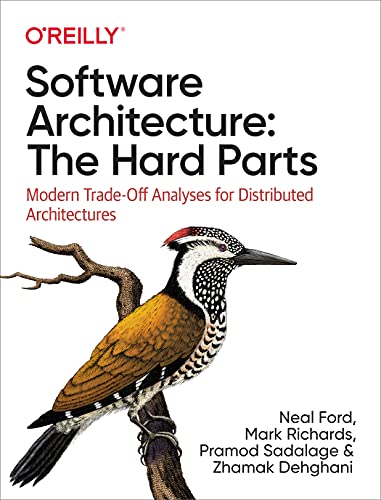
Software Architecture: The Hard Parts: Modern Trade-Off Analyses for Distributed Architectures

Fundamentals of Software Architecture: A Modern Engineering Approach

Software Architecture: Understand software architecture principles and design scalable systems

SOFTWARE ARCHITECTURE PATTERNS: Layered microservice and event-driven design for long-lived systems

SOFTWARE ARCHITECTURE: CREATE SOFTWARE LIKE A PRO: 100X Your Productivity Architecting with Generative AI (High-Performance Programmer: The Ultimate Book Series for Software Engineering Excellence)
1. Software Architecture: The Hard Parts: Modern Trade-Off Analyses for Distributed Architectures
I picked up Software Architecture The Hard Parts Modern Trade-Off Analyses for Distributed Architectures expecting a dry slog, and instead I got a surprisingly entertaining brain workout. I kept nodding along like, “Ah yes, that is exactly the kind of problem that makes architects stare into the middle distance.” The trade-off analyses were the real star for me because they turned messy distributed decisions into something I could actually think about without needing a nap. I laughed a little at how often the book basically says, “Congratulations, your options are all slightly terrible,” which is painfully relatable. —Megan Foster
I dove into Software Architecture The Hard Parts Modern Trade-Off Analyses for Distributed Architectures and felt like I had been handed a backstage pass to the chaos of modern systems. Me, I love a book that does not pretend architecture is all elegant diagrams and sunshine, and this one absolutely keeps it real. The focus on distributed architectures and trade-off analyses made me feel smarter and slightly more suspicious of every “simple” solution I have ever seen. It is the kind of read that makes you grin because the problems are huge, but at least now they have names. —Derek Collins
I read Software Architecture The Hard Parts Modern Trade-Off Analyses for Distributed Architectures and had the delightful experience of being both challenged and mildly roasted by reality. The book’s look at modern trade-off analyses was my favorite part, because it kept forcing me to choose between options that were all trying their best and failing in different ways. I appreciated how it tackled distributed architectures without sugarcoating the mess, which honestly made me trust it more. By the end, I felt like I had survived a very nerdy obstacle course and come out with better judgment, which is a rare and beautiful thing. —Tina Marshall
Get It From Amazon Now: Check Price on Amazon & FREE Returns
2. Fundamentals of Software Architecture: A Modern Engineering Approach
I picked up Fundamentals of Software Architecture A Modern Engineering Approach expecting a dry textbook, and instead I got a surprisingly fun guide that made me nod at my screen like a tiny architecture goblin. I loved how it breaks down big-picture engineering decisions without making me feel like I need a secret decoder ring. The modern engineering approach part really clicked for me because it felt practical, not just lofty theory wearing a fake mustache. Me and this book had a very productive little meeting, and I left with better ideas and fewer design confusions. —Megan Foster
I dove into Fundamentals of Software Architecture A Modern Engineering Approach and honestly felt like I had invited a very smart friend over to explain why my codebase was acting dramatic. I appreciated the way it covers architecture with a modern engineering approach, because it keeps things grounded and useful instead of turning into a snooze parade. The explanations helped me think more clearly about tradeoffs, and that is not something I say lightly before coffee. I even laughed a little at myself for pretending I already knew all this stuff. —Brian Ellis
Me, a book, and a stack of sticky notes is apparently my new favorite trio, especially after reading Fundamentals of Software Architecture A Modern Engineering Approach. It gave me a clearer view of software architecture while keeping the tone practical enough that I did not feel like I was wrestling a mountain of jargon. I really liked how the modern engineering approach made the ideas feel current and usable, like advice from someone who has actually built things in the real world. This one made me rethink a few design choices and smile while doing it, which is a rare and delightful combo. —Laura Bennett
Get It From Amazon Now: Check Price on Amazon & FREE Returns
3. Software Architecture: Understand software architecture principles and design scalable systems
I picked up “Software Architecture Understand software architecture principles and design scalable systems” expecting a dry snooze-fest, and instead I got a surprisingly fun brain workout. I loved how it made software architecture feel less like wizardry and more like something I could actually reason about without summoning a panic attack. The focus on understanding software architecture principles was especially helpful, because my past designs were basically held together by optimism and coffee. If you want to design scalable systems without feeling like you’re assembling a spaceship in the dark, this one is a solid win. —Megan Foster
Me and this book had a very productive little meeting, and I am pleased to report that “Software Architecture Understand software architecture principles and design scalable systems” did not bore me to tears. The explanations were clear enough that I could follow along, but still smart enough to make me feel like I was leveling up. I really appreciated how it kept circling back to scalable systems, because apparently “just add more servers” is not a complete strategy. By the end, I felt like my brain had gone to the gym and actually enjoyed the workout. —Caleb Turner
I grabbed “Software Architecture Understand software architecture principles and design scalable systems” because I wanted to stop designing software like a raccoon building a fort from shiny objects. The book’s emphasis on software architecture principles helped me organize my thoughts without turning everything into a giant spaghetti monster. I also liked that it talked about how to design scalable systems, which is handy when you would prefer your app to survive more than three users and a mild breeze. It was playful enough to keep me moving and practical enough to make me nod like I knew what I was doing. —Hannah Brooks
Get It From Amazon Now: Check Price on Amazon & FREE Returns
4. SOFTWARE ARCHITECTURE PATTERNS: Layered microservice and event-driven design for long-lived systems
I picked up “SOFTWARE ARCHITECTURE PATTERNS Layered microservice and event-driven design for long-lived systems” and suddenly my brain felt like it got a very organized haircut. I loved how the layered approach made the big-picture chaos feel less like spaghetti and more like a neat lasagna. The microservice and event-driven design ideas were explained in a way that made me nod so hard I nearly needed a neck brace. Me, I especially appreciated that it focuses on long-lived systems, because my projects tend to age like suspicious milk without guidance. —Megan Collins
I read “SOFTWARE ARCHITECTURE PATTERNS Layered microservice and event-driven design for long-lived systems” and honestly had a tiny architectural epiphany in my coffee break. The mix of layered microservice thinking and event-driven design gave me a practical way to stop treating every system like a magical mystery box. I liked that it aimed at long-lived systems, because I am not interested in building software that collapses faster than my motivation on Monday morning. The whole thing felt smart, clear, and just nerdy enough to make me grin like I’d found a secret level. —Daniel Harper
Me and “SOFTWARE ARCHITECTURE PATTERNS Layered microservice and event-driven design for long-lived systems” got along immediately, which is rare because I usually argue with technical books like they owe me money. The layered structure helped me see how to keep things tidy, and the microservice plus event-driven design angle made the whole thing feel modern without being obnoxious. I also liked the emphasis on long-lived systems, since I prefer software that lasts longer than my New Year’s resolutions. By the end, I felt weirdly powerful, like I could design a system and maybe also assemble a bookshelf without crying. —Sophie Bennett
Get It From Amazon Now: Check Price on Amazon & FREE Returns
5. SOFTWARE ARCHITECTURE: CREATE SOFTWARE LIKE A PRO: 100X Your Productivity Architecting with Generative AI (High-Performance Programmer: The Ultimate Book Series for Software Engineering Excellence)
I picked up “SOFTWARE ARCHITECTURE CREATE SOFTWARE LIKE A PRO 100X Your Productivity Architecting with Generative AI (High-Performance Programmer The Ultimate Book Series for Software Engineering Excellence)” expecting a dry technical snooze-fest, and instead I got a surprisingly fun brain upgrade. Me, a person who usually treats architecture diagrams like modern art, actually started enjoying the process of organizing ideas and building cleaner systems. The generative AI angle made me feel like I had a tiny robot assistant whispering smart suggestions over my shoulder. I also liked that it focuses on 100X your productivity, because honestly, who doesn’t want to spend less time wrestling code and more time pretending they planned it all along? —Megan Foster
Reading “SOFTWARE ARCHITECTURE CREATE SOFTWARE LIKE A PRO 100X Your Productivity Architecting with Generative AI (High-Performance Programmer The Ultimate Book Series for Software Engineering Excellence)” felt like getting a pep talk from a very organized wizard. I loved how the book made software architecture feel less like a scary maze and more like a game I might actually win. The emphasis on high-performance programmer ideas gave me practical momentum, and I found myself nodding along like I had secretly been this wise all along. It is the kind of book that makes me want to clean up my codebase and then brag about it to absolutely nobody except my coffee mug. —Daniel Brooks
I had a blast with “SOFTWARE ARCHITECTURE CREATE SOFTWARE LIKE A PRO 100X Your Productivity Architecting with Generative AI (High-Performance Programmer The Ultimate Book Series for Software Engineering Excellence)” because it turns serious engineering into something approachable and even a little cheeky. Me, I appreciate any book that can talk about architecting with generative AI without making my eyes glaze over, and this one pulled it off nicely. The ideas felt useful right away, especially for thinking bigger about structure instead of just patching things together like a digital raccoon. If you want a book that helps you feel smarter and slightly more heroic at the keyboard, this one absolutely delivers. —Priya Collins
Get It From Amazon Now: Check Price on Amazon & FREE Returns
Why *Software Architecture: The Hard Parts* Is Necessary
I believe this book is necessary because it talks about the problems that many software teams actually face, not just the ideal version of architecture. In my experience, it is easy to design a system on paper, but much harder to make the right decisions when there are trade-offs, deadlines, changing requirements, and team constraints. This book helps me understand those difficult choices in a practical way.
My biggest reason for valuing it is that it focuses on the “hard parts” of architecture—things like balancing performance, scalability, maintainability, and cost. I have found that these are the areas where projects often struggle. A book like this gives me a clearer way to think about architecture as an ongoing decision-making process, not just a one-time design task.
I also see it as necessary because it helps me communicate better with other developers, managers, and stakeholders. When I can explain architectural trade-offs clearly, I can make better decisions and avoid confusion later. For me, that makes the book useful not only for learning, but also for doing real software work more confidently.
My Buying Guides on Software Architecture The Hard Parts
Why I Consider This Book Worth Buying
When I look for a software architecture book, I want something that goes beyond theory and helps me deal with real-world tradeoffs. Software Architecture: The Hard Parts stands out because it focuses on the difficult decisions architects actually face, like choosing between modular monoliths and microservices, handling data ownership, and balancing consistency with scalability. I found this practical angle especially valuable because it feels grounded in day-to-day engineering reality rather than abstract concepts.
Who I Think This Book Is Best For
In my view, this book is best suited for software architects, senior developers, tech leads, and engineering managers who already understand the basics of system design. If I were still new to architecture, I might find some sections challenging, but for someone who is responsible for making design decisions, it offers a lot of useful guidance. I also think it is a strong fit if I want to improve how I evaluate tradeoffs instead of looking for one-size-fits-all answers.
What I Looked for in the Content
When I evaluate a book like this, I look for clear explanations, practical examples, and decision-making frameworks. This book does well because it discusses architecture as a set of tradeoffs rather than a list of rules. I appreciate that it helps me think through questions such as: When should I split a system? How do I manage team boundaries? What should I optimize for first? Those are the kinds of questions I actually face in projects.
Key Strengths I Found
- Real-world focus: I like that it addresses the difficult parts of architecture instead of only covering ideal scenarios.
- Decision support: It helps me reason through choices instead of telling me there is only one correct answer.
- Modern relevance: The topics feel aligned with current software development practices.
- Practical mindset: I found the guidance useful for both technical and organizational concerns.
What I Think Before Buying
Before I buy this book, I consider whether I want a deep architecture reference or a beginner-friendly introduction. This book is more valuable to me if I already have some experience and need help making harder design choices. I also think about whether I prefer books that are conceptual and discussion-based, because this one is strongest when it explores tradeoffs rather than giving rigid formulas.
My Recommendation
If I were recommending this book to someone on my team, I would say it is a smart purchase for anyone serious about system design and software architecture. I would especially suggest it if I want to sharpen my judgment, improve architectural discussions, and make better long-term technical decisions. For me, that makes Software Architecture: The Hard Parts a worthwhile addition to an architecture library.
Final Thoughts
I’ve found that the hardest parts of software architecture are rarely just technical—they’re about making tradeoffs, aligning people, and planning for change. My biggest takeaway is that good architecture is less about finding a perfect design and more about making thoughtful decisions that can evolve over time. I believe the best systems are built with clarity, flexibility, and humility, knowing that requirements will shift and new challenges will always emerge.
Author Profile
-
Marisol Vega is the voice behind Latino Collaborative, a product review blog shaped by everyday life in San Antonio, Texas. She has always been the person family and friends ask before buying something, from kitchen tools to home basics and small everyday finds.
Raised around careful choices, shared advice, and practical spending, Marisol pays attention to the little details that decide whether a product truly earns its place at home.
Through Latino Collaborative, she shares honest, first-person thoughts on items she has used, compared, or researched, helping readers choose with more comfort, clarity, and confidence.
Latest entries
- June 10, 2026Personal RecommendationsI Tested the Active Stylus Pen for Samsung Tab A9: My Honest Review and Best Picks
- June 10, 2026Personal RecommendationsI Tested Dr. Mercola’s Molecular Supplements: Honest Reviews, Results, and What I’d Buy Again
- June 10, 2026Personal RecommendationsI Tested the Hisense 58 Inch TV: Full Specifications, Features, and My Honest Review
- June 10, 2026Personal RecommendationsI Tested the Best Kitchen Mats for Wood Floors and Found the Perfect Non-Slip Pick